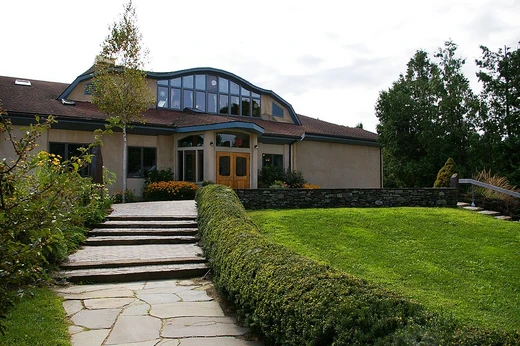
Stellenbosch University
Public research university in South Africa; home of SUNSAT microsatellite.

via Wikipedia: Stellenbosch University · see source
Stellenbosch University (SU) is a public research university in Stellenbosch, Western Cape, South Africa. It received full university status in 1918 and is known for designing and manufacturing Africa's first microsatellite, SUNSAT, launched in 1999. The university is organized across 10 faculties and 139 departments, with approximately 32,000 students across five campuses. Its students are nicknamed "Maties" — a term of uncertain origin, possibly from the Afrikaans word "tamatie" (tomato, referring to maroon sports uniforms) or the colloquialism "maat" (buddy).
- established
- 1918 (as university; origins in 1864 as Stellenbosch Gymnasium)
- location
- Stellenbosch, Western Cape, South Africa
- students
- 32,000
- faculties
- 10
- known_for
- Designing and manufacturing Africa's first microsatellite, SUNSAT (1999); first
Verified Timeline
Lore & Background
The university traces its roots to the Stellenbosch Gymnasium, founded in 1864 and opened on 1 March 1866. The first five students matriculated in 1870, and by 1873 four of them became the institution's first graduates by attaining the "Second Class Certificate" through distance learning. In 1874, a series of government acts provided for colleges and universities, and a personal intervention by the Prime Minister ensured Stellenbosch qualified after initially being allocated as purely a secondary school. The institution acquired its first professor in 1874, and its first academic senate was constituted at the beginning of 1876. The first MA degree — in Stellenbosch and in South Africa — was completed in 1878, and that same year the Gymnasium's first four female students were enrolled. The institution became Stellenbosch College in 1881, then Victoria College in 1887, and finally Stellenbosch University on 2 April 1918 after a bequest from wealthy farmer Jannie Marais, who died in 1915. His gift required that Dutch/Afrikaans have equal status to English and that lecturers teach at least half their lectures in Dutch/Afrikaans; by 1930 very little instruction was delivered in English. In December 2014, specialists at the university performed the first successful penis transplantation on a 21-year-old man. Stellenbosch University was also the first African university to sign the Berlin Declaration on Open Access to Knowledge in the Sciences and Humanities.
Reader's Guide
Stellenbosch University holds significance as a leading South African research institution and the first African university to sign the Berlin Declaration on Open Access to Knowledge. Its development from a small gymnasium to a full university reflects the educational priorities of the Cape Colony and later South Africa. The university's role in producing SUNSAT, Africa's first microsatellite launched in 1999, highlights its contributions to space technology. The institution's language policy has evolved from predominantly Afrikaans to a multilingual approach including Afrikaans, English, and Xhosa, reflecting demographic shifts. As of 2021, 48.7% of students stated English as their home language, 37.4% Afrikaans, 6.8% another South African official language, and 7.1% an international language. Between 2017 and 2021, the percentage of undergraduates preferring English as the language of learning and instruction increased from 68.2% to 80.8%. The university annually hosts the SU Woordfees, a predominantly Afrikaans-language festival. Its five campuses include the main campus in Stellenbosch, Bellville Park (Business School), Saldanha (Military Science), Tygerberg (Medicine and Health Sciences), and Ukwanda Rural Clinical (Medicine and Health Sciences). The university's 34 residence halls offer women-only, men-only, and mixed-gender configurations, each supervised by a resident head and a House Committee of senior students.
Did You Know?
- Stellenbosch University performed the first successful penis transplantation in December 2014 on a 21-year-old man.
- The university's nickname 'Maties' likely comes from the Afrikaans word 'tamatie' (tomato) referring to maroon sports uniforms, or from 'maat' (buddy).
- The first MA degree in South Africa was completed at Stellenbosch in 1878.
- Jannie Marais, a wealthy farmer, bequeathed the £100,000 needed for the college to become a university, with conditions including equal status for Dutch/Afrikaans and English.
- Stellenbosch University was the first African university to sign the Berlin Declaration on Open Access to Knowledge.
Frequently Asked Questions
What is Stellenbosch University?
Stellenbosch University is a public research institution based in the Western Cape town of Stellenbosch, South Africa. It was granted full university status in 1918, though its academic lineage stretches back to a gymnasium established in 1864.
What is SUNSAT and why does it matter?
SUNSAT was a microsatellite designed and built by Stellenbosch University researchers, making it the first of its kind produced on the African continent. It reached orbit in 1999 and remains one of the university's most celebrated engineering achievements.
How big is Stellenbosch University and how is it structured?
The university enrolls roughly 32,000 students spread across five campuses in the region. Its academic organization spans 10 faculties that together house 139 distinct departments.
What makes Stellenbosch University stand out among African institutions?
It was the first African university to sign the Berlin Declaration on Open Access to Knowledge, championing free scholarly access. It is also widely recognized for engineering Africa's first microsatellite, SUNSAT.
Where exactly is Stellenbosch University located?
The main campus sits in the town of Stellenbosch in South Africa's Western Cape province, with four additional campuses in the surrounding area.
More in Education & Schools 25-32
Elsewhere in the Education & Schools universe
Spotted an error? Know more?
This is a living reference — every entry is fact-audited, and reader corrections feed straight into our audit queue. Suggest an edit · See this site's audit record