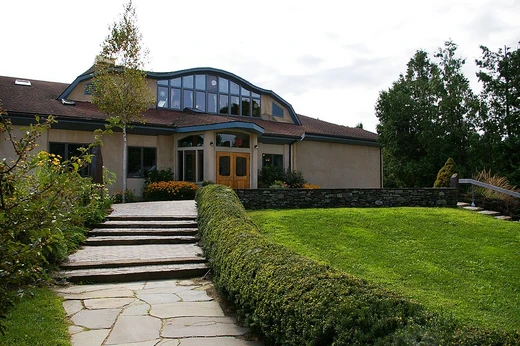
Secondary school
Institution providing secondary education, typically for ages 11 to 18.

A secondary school, also known as a high school or senior school, is an institution that provides secondary education, typically following primary school and preparing students for vocational or tertiary education. These schools are a key component of education systems worldwide, with attendance usually compulsory at least until age 16 in high and middle income countries.
- Levels
- ISCED levels 2 (lower secondary) and 3 (upper secondary)
- Typical age range
- 11 to 18 years old, with variations by country
- Common names
- High school, secondary college, Gymnasium, secundaria
- Compulsory attendance
- At least until age 16 in high and middle income countries
Lore & Background
Secondary schools follow on from primary schools and prepare for vocational or tertiary education. In the ISCED 2014 education scale, levels 2 and 3 correspond to secondary education: lower secondary education (first stage, typically ages 11–15) and upper secondary education (second stage, typically ages 15–18). Some schools provide both levels, while others separate them into different institutions. Variations exist by country: for example, in Australia, Hong Kong, and Spain, children change from primary to secondary systems at age 12, with the ISCED's first year of lower secondary being the last year of primary provision. In the US, most local systems have separate middle schools (grades 6–8 or 7–8, ages 11–14) and high schools (grades 9–12, ages 14–18). In the United Kingdom, most secondary state schools accommodate pupils between ages 11 and 16 or 11 and 18, while some private schools admit pupils between ages 13 and 18. In South Africa, primary school runs from grade 1–7 and high school from grade 8–12, with no middle school.
Reader's Guide
Secondary schools are central to formal education, bridging primary schooling and higher education or employment. The organizations, buildings, and terminology are unique in each country, but the core function remains consistent: providing subject-oriented curriculum at lower secondary level and preparing students for tertiary education or vocational paths at upper secondary level. Arguments for smaller schools include shared experience, higher average achievement, and lower educational inequality; arguments for larger schools focus on economy of scale and specialization, though cost savings have generally not materialized. The article notes that larger schools tend to be more hierarchical and bureaucratic, with fewer personal connections, and that these effects cannot be entirely overcome through house systems or 'school within a school' programs.
Did You Know?
- In Australia, Hong Kong, and Spain, children change from primary to secondary systems at age 12, with the ISCED's first year of lower secondary being the last year of primary provision.
- In the United Kingdom, most secondary state schools accommodate pupils between ages 11 and 16 or 11 and 18, while some private schools admit pupils between ages 13 and 18.
More in Education & Schools 1-24
Elsewhere in the Education & Schools universe
Spotted an error? Know more?
This is a living reference — every entry is fact-audited, and reader corrections feed straight into our audit queue. Suggest an edit · See this site's audit record