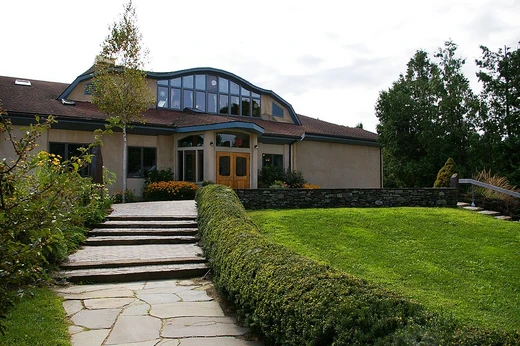
Primary school
Primary school provides fundamental skills in reading, writing, and mathematics.

A primary school (also called elementary school or grade school) is an institution providing primary education for children, typically aged 4 to 11 years. It follows preschool and precedes secondary schooling, forming the first stage of compulsory education in most parts of the world.
- Also known as
- elementary school, grade school
- Typical age range
- 4 to 11 years
- ISCED level
- Level 1: Primary education or first stage of basic education
Lore & Background
Primary school is the preferred term in the United Kingdom, Ireland, many Commonwealth nations, and most UNESCO publications. Elementary school is the synonym mainly used in the United States. In the Chinese-speaking world, the term xiǎo xué (小学) is used, with 國小 more common in Taiwan. In German, Grundschule is used in Germany, Primarschule in Liechtenstein and Switzerland, and Volksschule in Austria and Switzerland.
Reader's Guide
Primary schools are foundational institutions in education systems worldwide, providing the first stage of compulsory schooling and establishing fundamental skills in reading, writing, and mathematics. They are classified as ISCED Level 1, the first stage of basic education. The term "primary school" is widely used in the United Kingdom, Ireland, and many Commonwealth nations, while "elementary school" is common in the United States and the Philippines. School building design must accommodate curriculum, teaching methods, costs, and political frameworks, with UK standards specifying minimum floor areas (e.g., 62 m² for reception classes). Governance and funding vary, including state, religious, charitable, or parental sources. Accountability may involve informal assessment or state-run testing regimes like Ofsted in the UK. Primary schools remain central to global education, shaping early learning and social development.
Frequently Asked Questions
What is a primary school?
A primary school is the first formal stage of compulsory education, sitting between preschool and secondary schooling. It is also commonly referred to as an elementary school or grade school depending on the region.
What age range does primary school cover?
Primary education typically serves children between the ages of 4 and 11, making it the foundational learning period before students transition into secondary schooling.
What core subjects does primary school focus on?
The curriculum centers on building fundamental literacy and numeracy skills, specifically reading, writing, and mathematics. These competencies form the academic base for all later schooling.
More in Education & Schools 1-24
Elsewhere in the Education & Schools universe
Spotted an error? Know more?
This is a living reference — every entry is fact-audited, and reader corrections feed straight into our audit queue. Suggest an edit · See this site's audit record