
State University of New York

New York State Archives: https://digitalcollections.archives.nysed.gov/index.php · Public domain
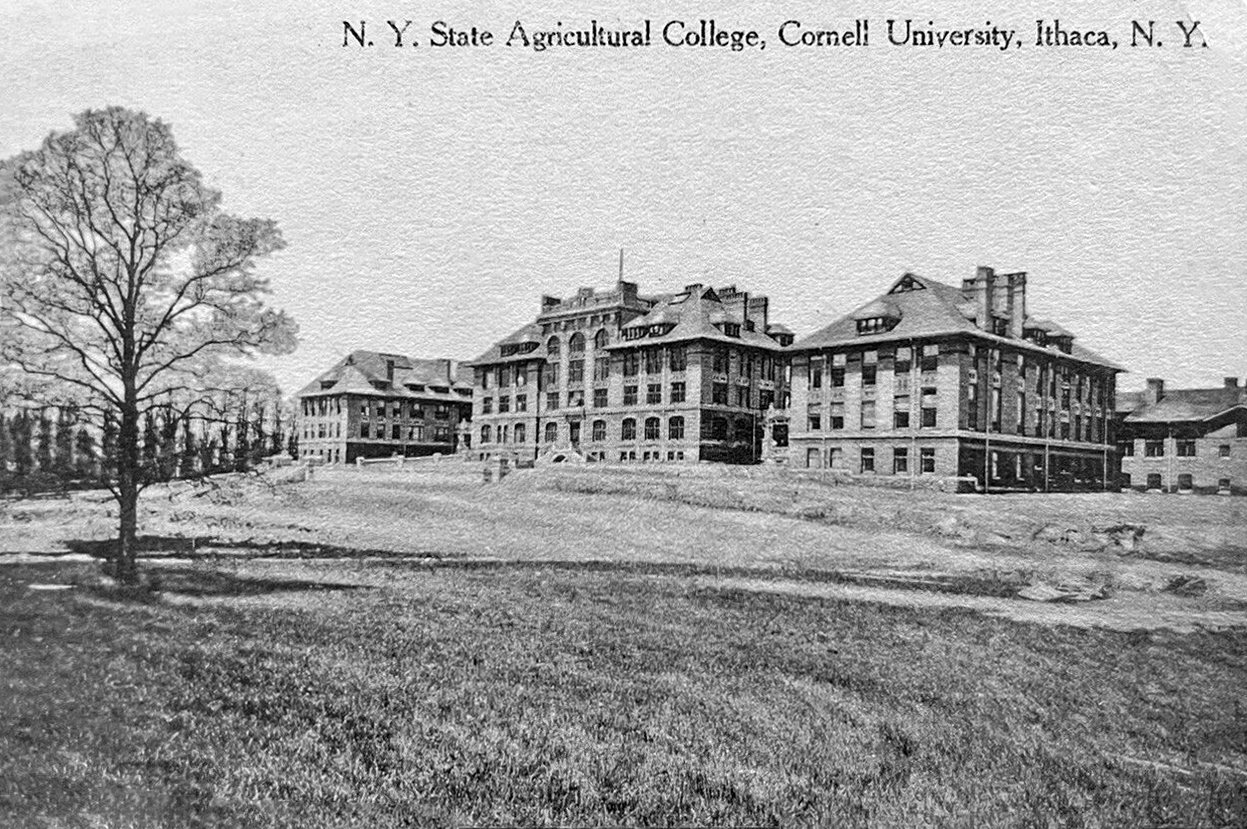
It comprises all New York state-supported institutions of higher education apart from the City University of New York (CUNY), and includes four contracted colleges operating with Cornell University.
- chancellor
- John B. King
- budget
- $13.37 billion
- flagship universities
- Stony Brook University and University at Buffalo
Lore & Background
SUNY was created after New York was one of the last US states to set up a state college and university system.
Reader's Guide
The State University of New York system was greatly expanded during the administration of Governor Nelson A. Rockefeller, who took a personal interest in design and construction of new facilities. Rockefeller championed the acquisition of the private University of Buffalo into the system, making it the State University of New York at Buffalo. The system includes university centers, comprehensive colleges, technology colleges, community colleges, and statutory colleges. The SUNY Charter Schools Institute was established in 1999 to assist with charter school authorizing. SUNY and CUNY are separate systems, both receiving state funding. SUNY is not to be confused with the University of the State of New York (USNY), which is a governmental umbrella organization.
Governance & Institutional Reach
The New York State Education Department operates under the leadership of the Board of Regents of the University of the State of New York, with the Commissioner of Education handling day-to-day administration. Its jurisdiction stretches well beyond the typical K-12 classroom. The department supervises every public school in the state, produces and administers standardized tests and the well-known Regents Examinations, oversees higher education institutions, manages cultural entities such as museums and libraries, coordinates vocational rehabilitation services, and licenses a wide range of professions. All of its regulations are codified in Title 8 of the New York Codes, Rules and Regulations. The department's principal offices are housed in the New York State Department of Education Building on 89 Washington Avenue in Albany, the state capital, placing the administrative heart of New York's educational system squarely in the seat of state government.
Curriculum Standards & Their Evolution
A major shift came when the Board of Regents adopted the Common Core State Standards for Mathematics and for English Language Arts and Literacy in History/Social Studies, Science, and Technical Subjects on July 19, 2010, while reserving the right to add state-specific expectations. The Board later adopted a new social studies curriculum, the New York State Common Core Social Studies Framework, at its April 2014 meeting, and approved new P-12 Science Learning Standards at its December 2016 session.
The Assessment Architecture
State testing in New York requires all students in grades 3 through 8 to sit examinations in Mathematics, English, and Science; a previously mandated Social Studies standardized test has since been discontinued. High school students face the Regents exams in English, Mathematics, Science, Social Studies, and a Language Other Than English. Students who opt out of a foreign-language sequence can fulfill the Regents credit requirement through a combination of business education, art, music, and technology classes. Earning a high school diploma demands passing scores in English, mathematics, United States history and government, science, and global history and geography. Students with Individualized Education Programs who are unable to pass the Regents may instead qualify for a local diploma through the Regents Competency Test.
Funding, Outcomes & Data Infrastructure
Despite this substantial investment, the state's graduation rate sat at 80.2 percent in 2017, trailing the national average of 84 percent, though a modest year-over-year gain may have been aided by the state's decision to eliminate one required test. Notably, schools in poor, high-need districts received significantly less funding than their better-resourced counterparts. To monitor and improve performance, NYSED built a Data Warehouse that assigns every K-12 public school student a unique 10-digit NYSSIS identifier, stored in the SIRS database. Assessment data flows through a tiered system—local school input at Level 0, regional aggregation at Levels 1 and 1C, and statewide repositories at Levels 2 and 3—where identifiers are encrypted for privacy while still enabling school report cards and accountability decisions.
Gallery

Frequently Asked Questions
How does State University of New York's story end?
SUNY's story has no final chapter because it remains an active, ongoing institution. As of the latest available information, it continues to operate under Chancellor John B. King, sustaining its role as New York's largest public university system.
More in Education & Schools 25-32
Elsewhere in the Education & Schools universe
Spotted an error? Know more?
This is a living reference — every entry is fact-audited, and reader corrections feed straight into our audit queue. Suggest an edit · See this site's audit record